NAIROBI, KENYA, 22 October 2026 – Opening The Trust Summit in Nairobi today, the Deputy Chairperson of the African Union Commission, H.E. Selma Malika Haddadi, called on governments, institutions, businesses and civil society to recognise trust as an essential form of infrastructure, as vital to Africa’s integration and to global cooperation as roads, railways, energy networks and digital connections.
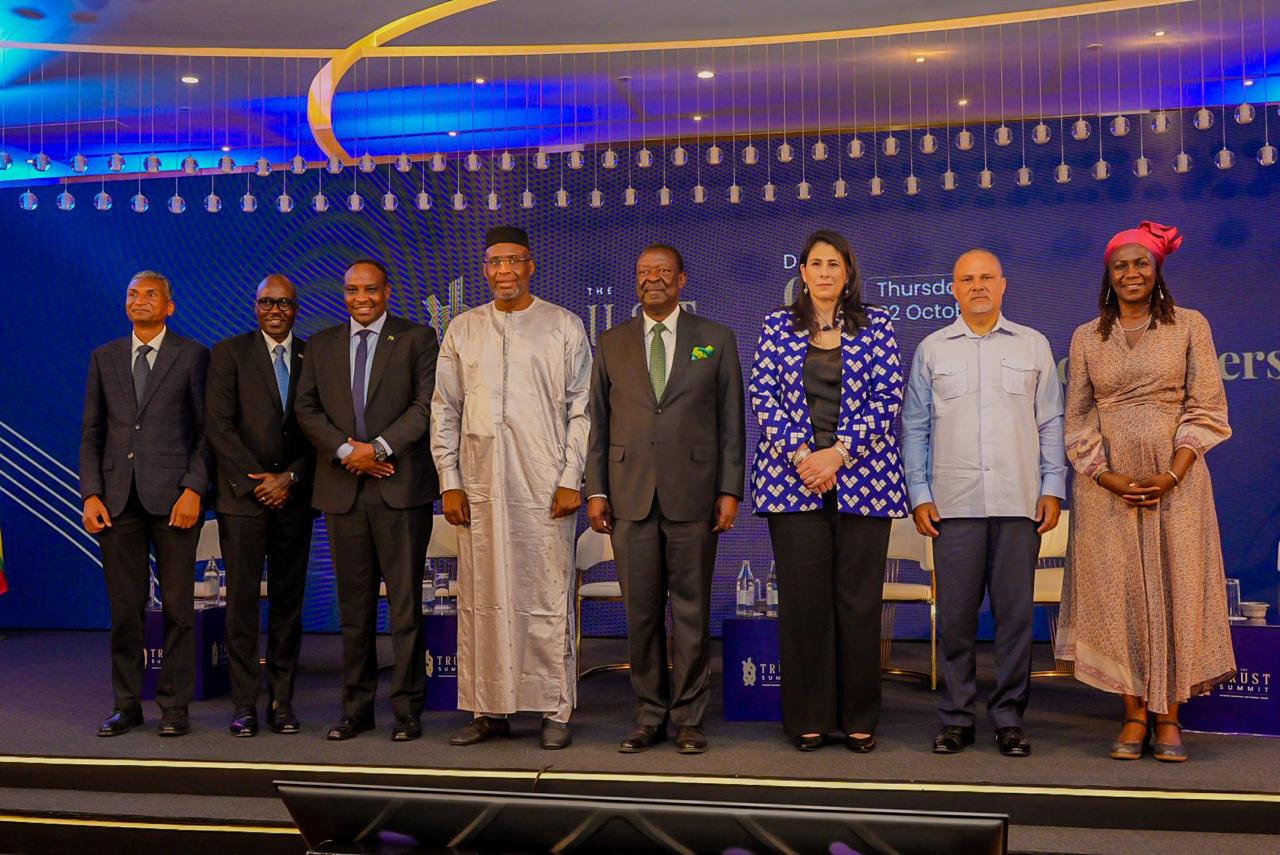
Addressing Heads of Delegation and distinguished guests, including Kenya’s Prime Cabinet Secretary and Cabinet Secretary for Foreign and Diaspora Affairs, Hon. Musalia Mudavadi, former Mali Prime Minister H.E. Moussa Mara, Tanzania’s Deputy Minister of Foreign Affairs and East Africa Cooperation, Hon. James Ole Millya, and Principal Secretary for Foreign Affairs of Kenya, Dr. Abraham Korir Sing’Oei, the Deputy Chairperson described a world in which interdependence is undeniable, yet confidence between nations and institutions is increasingly fragile.
“We have never needed one another more, while finding it increasingly difficult to trust one another,” she said, naming this as one of the defining paradoxes of our time. From conflict and climate change to economic uncertainty and technological transformation, she noted, the challenges facing humanity demand greater cooperation precisely when the relationships that sustain it are under strain.
Trust as the invisible infrastructure of cooperation
Ms. Haddadi argued that agreements, institutions and declarations, while essential, cannot deliver cooperation through rules and structures alone. Beyond physical and digital networks, she said, lies a less visible foundation: the infrastructure of trust, which allows institutions to cooperate, governments and businesses to recognise their responsibilities, and nations to believe that today’s commitments will be honoured tomorrow.
“Trust is therefore not simply a moral aspiration. It is an essential condition of our collective capacity to act,” she said.
The African Union: earning confidence, funding the mission
Tracing Africa’s institutional journey from the Organisation of African Unity to the African Union, the Abuja Treaty, Agenda 2063 and the African Continental Free Trade Area, the Deputy Chairperson said the next stage of integration must be measured by the capacity to turn agreements into lasting relationships of cooperation and shared responsibility.
She stressed that the Union must continuously earn the confidence of its Member States through effectiveness, accountability and delivery, and that this confidence must be matched by political and financial commitment from Member States, African financial institutions and the African private sector. Sustainable and predictable financing of the Union, she said, is “an expression of shared ownership” and a testimony of trust in the institution, underpinning Aspiration 7 of Agenda 2063: Africa as a strong, united, resilient and influential global player and partner.
She acknowledged the leadership of H.E. President William Ruto, African Union Champion for Institutional Reform, in advancing a more effective, accountable and financially sustainable Union.
Peace and security: confidence that must be sustained
On peace and security, Ms. Haddadi pointed to Article 4(h) of the Constitutive Act and the Protocol establishing the Peace and Security Council as a profound act of confidence, with sovereign States entrusting a continental institution with responsibilities touching their most fundamental interests. For mediation to succeed, collective action to be effective and peace to endure, she said, trust in the process and adequate funding must go hand in hand.
“Trust is not merely an outcome of peace. It is also one of the conditions that makes peace possible,” she added.
Multilateralism: defend it and reform it
Turning to the global stage, the Deputy Chairperson said that restoring trust in international institutions has become a matter of urgency at a time when international law is increasingly challenged. She welcomed the choice of “Restoring Trust, Managing Transformation: A United Nations That Delivers for All” as the theme of the 81st session of the UN General Assembly, and recalled Secretary-General António Guterres’s words that the United Nations “has never been perfect, but it is irreplaceable.”
“Defending and preserving multilateralism and reforming it are not competing ambitions. They are mutually reinforcing responsibilities,” she said. She noted that the UN@80 reform initiative offers an opportunity to strengthen effectiveness and accountability, but that meaningful reform must also address representation, fairness and the consistent application of international law, essential conditions for African confidence in the international order.
From conversation to commitment
Ms. Haddadi linked the Summit’s agenda to a single question: how to build institutions and relationships worthy of the confidence placed in them. Discussions on democracy and citizen participation, finance, trade and investment, peace, security, climate and public health, and digital transformation and artificial intelligence, she observed, are different expressions of that question.
She welcomed the Summit’s emphasis on moving from conversation to commitment, and the proposed Nairobi Call to Action and its accompanying mechanisms, whose credibility, she said, will depend on ownership of commitments and the seriousness of their implementation. She commended Kenya for convening the Summit as a demonstration of its commitment to dialogue, African leadership and international cooperation.
“Trust cannot be proclaimed into existence. It must be earned through the way we govern, the way we cooperate and the commitments we honour,” she said, concluding: “Let Nairobi be remembered not only as a place where we reflected on the importance of trust, but as a place where we strengthened our collective determination to earn it.”